

/filters:quality(70)/prod01/prodbucket01/media/durham-university/departments-/philosophy/16115.jpg)
Projects
FunMo - Functions at the molecular scale
Francesca Bellazzi (PI)
- The project investigates the functionality of molecules in living systems, exploring the borders between chemistry and life and the application of such notions in life sciences and medicine.
- While the notion of biological function has been widely explored in philosophy, very little has
 been written on functions at the molecular scale despite the fundamental role that this question plays in explaining the relations between the living and the non-living. A reason for this is that molecules are not traits to which we can ascribe evolutionary functions.
 - This project fills this gap by developing a philosophical account of molecular functionality and exploring its consequences. As an overall outcome, the project offers a foundational and philosophical account of functions to further explore natural kinds, functional kinds and the relation between life and its realisers.
- The results go beyond its philosophical contribution by providing new conceptual tools for the experimental biosciences that predict, replicate, and manipulate molecular functionality. This is relevant for, among others, three main fields: genetics, AI protein-folding prediction and synthetic biochemistry. The importance of functional characterisation for genetic sequences is seen in the debate on junk vs functional DNA in the Encyclopaedia of DNA elements (ENCODE). Moreover, notions of function are used by in-silico(AI) and in-vitro (synthetic biochemistry) research, based on predicting and manipulating the relation between chemical structure and function.
Leverhulme Trust Early Career Fellowship (2025-2028)
The Beliefless Spirituality Project: Philosophical Foundations and Scientific Explorations
Philip Goff (PI)
- We aim to investigate which distinct types of beliefless spirituality there are, the (dis)value of these types of spirituality, and how they can be fruitfully studied in empirical research.
- The results of the project will be especially illuminating for understanding the options for religious/spiritual practice available to those who find it difficult to hold explicit beliefs in religious/spiritual realities, which may include spiritual-but-not-religious individuals, agnostics, atheists, and people of faith experiencing significant doubt.
John Templeton Foundation (2025-2027)
Argument and Evidence in the Search for Extraterrestrial Life
Chris Cowie (Co-PI) & Peter Vickers (Co-PI)
- What would it take to know that we have succeeded in the search for extraterrestrial life? Is this viable?
British Society for the Philosophy of Science (2026)
Shadow Histories of Women in Philosophy
Emily Thomas (PI)
- Historically, Western philosophy has ignored women philosophers. As the Stanford Encyclopedia article “Feminist History of Philosophy” states, tradition holds ‘there are no women philosophers and, if there are any, they are unimportant’. This project seeks to further the ‘recovery project’ of historical women philosophers, especially focusing on historical women metaphysicians.
- As part of this, I’m looking at how women are represented within, and excluded from, ‘big’ histories of philosophy. This is a genre that dates to at least to Diogenes Laërtius’ third century Lives and Opinions of Eminent Philosophers. I’m studying how, straightforwardly and subtly, women philosophers are excluded from the history of their discipline. As a corrective, I’m writing a new, revisionist history of Western philosophy.
Leverhulme Prize (2023-2026)
Supported by Leverhulme Prize (2023-2026)
Exploring Uncertainty and Risk in Contemporary Astrobiology (EURiCA)
Peter Vickers (PI)
- Astrobiology is an unusual scientific field in a number of ways. One thing that sets it apart is the degree of uncertainty and disagreement in the community. For example, astrobiologists are divided on the extent to which ‘life’ should count as a reasonable explanation of a given phenomenon for which no abiotic account currently exists (most recently, apparent phosphine on Venus).
- Another is how a central concept in the field – that of a ‘biosignature’ – should be understood. Thus a re-think is warranted
 when it comes to a range of foundational questions, in the field, including appropriate handling of ‘risk’ and ‘reward’ when it comes to project design and funding. In this project we critically examine the foundations of astrobiology over a sustained period of time, combining scientific, philosophical, and historical perspectives and methods.
 - This project will take a major step forward in establishing the foundations of astrobiology as a transdisciplinary research field with potentially transformative consequences for scientific practice.
Supported by the Leverhulme Trust (2021-2024)
The Successes And Failures Of Science Through The Lens Of Intellectual Humility: Perspectives From The History And Philosophy Of Science
Robin Hendry (PI) & Nancy Cartwright (PI)
- Scientific endeavours fail or succeed for many reasons. We hypothesize that Intellectual Humility, or its lack, plays a significant role, not just as a virtue of individual scientists but as embodied in the norms, practices and institutions that constitute science.
- We will look at successes and failures in science through the lens of intellectual humility in order to chart what it looks like in scientific institutions and how it affects scientific success.
- This project aims to open up research on intellectual humility in science, to show how it affects how science is conducted, and how it impacts on science’s effectiveness and progress and its ability to serve society.
- To achieve our aims we will look at successes and failures in different domains of pure and applied science: physics, chemistry, and the socio-economic sciences.
Supported by the John Templeton Foundation (2021-2023)
 Inventing Time: Past, Present, and Future in British Metaphysics 1878-1938
Emily Thomas (PI)
- Are the past or future real? Does time have an irreversible direction, from past to future?
- Does the present really move, such that a wedding in the future becomes present, and then past? Today, these questions are central to the philosophy of time. Yet that was not always the case.
- This history of philosophy project tells 'origin stories'. It explores why and how these questions emerged in British philosophy around the turn of the twentieth century. Twelve philosophers were at the centre of these changes: Shadworth Hodgson, Bertrand Russell, Victoria Welby, J. M. E. McTaggart, Arthur Eddington, Susan Stebbing, Samuel Alexander, C. D. Broad, A. N. Whitehead, J. W. Dunne, Hilda Oakeley, and May Sinclair.
- This project will explore their theories of time, and contextualise them in the period. Their work was affected by developments in science, including new theories of evolution in biology, new theories of time perception in psychology, and new theories about spacetime in physics.
Supported by the Arts and Humanities Research Council (2020-2023)
Mapping the Quartet: The Living Legacy of a Female Philosophical School
Clare MacCumhaill (PI)
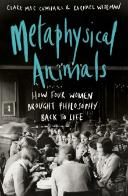
- Elizabeth Anscombe, Philippa Foot, Mary Midgley and Iris Murdoch were philosophy students at Oxford during the Second World War when most male undergraduates (and many tutors) were conscripted. Taught by refugee scholars, women and conscientious objectors, they developed a philosophy that could respond to the war's darkest revelations.
- Mapping the Quartet is a blend of philosophy and recovered history - bringing back to life the women who shared ideas, as well as sofas, shoes and even lovers.
Supported by the British Academy (2019-2021)