

Staff profile
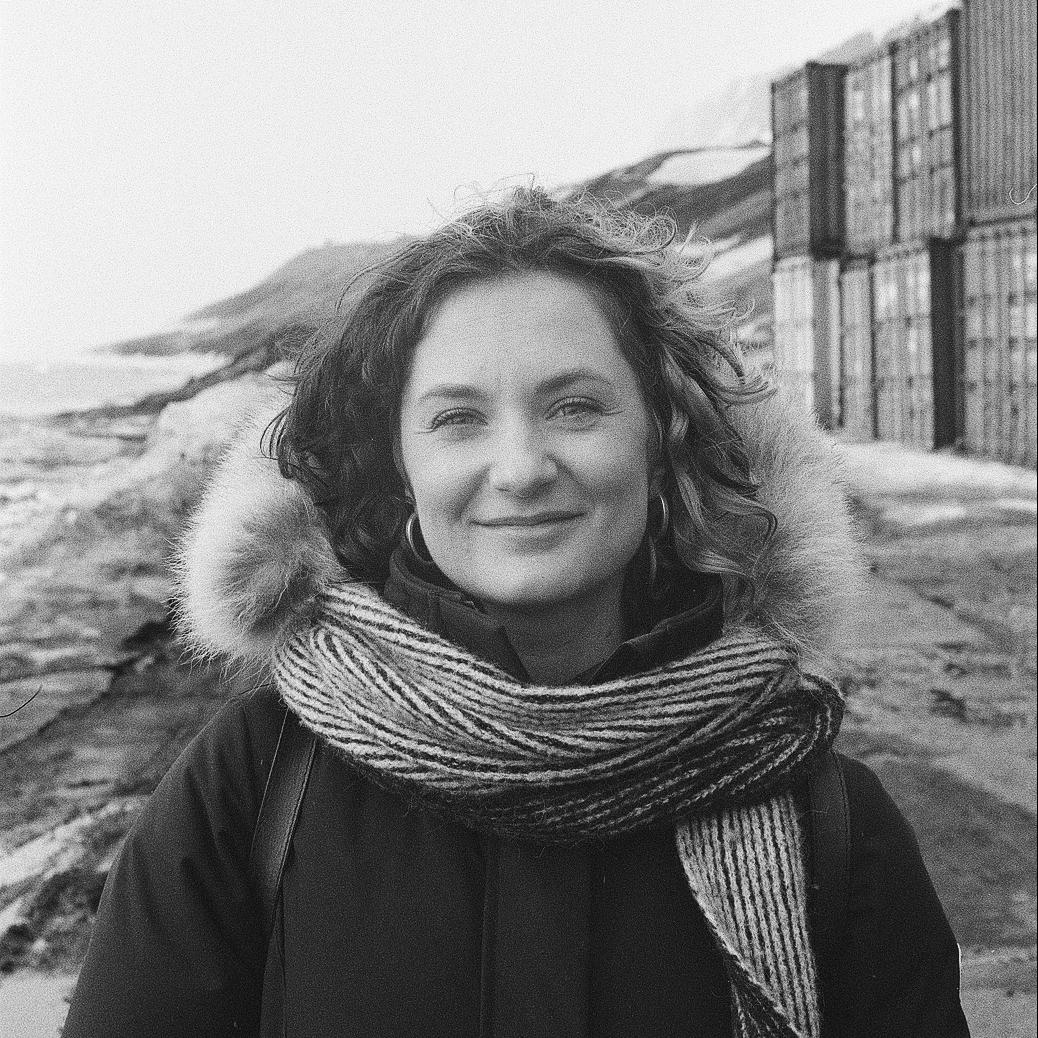
| Affiliation | Telephone |
|---|---|
| Assistant Professor in the Department of Sociology |
Biography
I grew up in Belarus and later moved to St Petersburg to study sociology, where I first encountered feminist theory. From there, I moved to Amsterdam to pursue a PhD in sociology at the University of Amsterdam. I then moved between postdoctoral research positions at KU Leuven in Belgium and Sciences Po in Paris. Each place has left its own imprint on how I think, on what matters in research, and on how academia can—or cannot—be a space of emancipation.
Research Overview
I am a feminist urban and environmental sociologist studying the relationships between political power, knowledge, and so-called “natural” environments—especially those environments that are considered too be too dynamic and complex to be easily controlled or made productive. Most of my work focuses on soils or grounds: complex, living ecosystems beneath our feet whose properties are central to a wide range of political and economic projects, from colonisation and resource extraction to urban development.
In my project Unruly Foundation, I ask: What happens when the soils upon which cities are built no longer provide a stable foundation for political and economic life? To answer this question, I turn to perennially frozen ground—permafrost—that is now thawing at an unprecedented scale, ‘threatening’ the stability of life in northern regions. This project traces, historically and ethnographically, urban planning and environmental governance on permafrost in two Arctic settlements: Soviet-Russian Barentsburg and Norwegian Longyearbyen, both sharing the ecology of Svalbard. I move between laboratories, planning offices, and residential spaces to understand how different practitioners perceive and respond to the often unpredictable behaviour of thawing permafrost. By focusing on material practices and situated understandings of permafrost, I want to generate insights into ways of living that do not take stability and permanence for granted.
My current project, Vital Grounds, shifts the focus from frozen permafrost to non-frozen soils of post-industrial North East England—a region whose soils are bound up in the legacy of industrial capitalism. Here, I ask how urban soils have been made materially and legally invisible within the processes of industrialisation and their afterlives. In this work, I explore emerging efforts to reframe urban soils as living ecological systems that demand care and protection, rather than as inert and disposable matter, and I trace the consequences of defining urban soils as ‘living’ in specific ways. I am particularly concerned with how communities living on former mining sites relate to ‘impure’ or ‘unhealthy’ soils, and how the material properties of these soils intertwine with enduring social and spatial inequalities that shape the region.
Beyond my focus on soils, I am also interested in the practices of managing the materialities of built environments during political turbulence. In my PhD project, Brick Is Warmer Than Concrete, I explored the aesthetic powers of materiality in places affected by political violence—such as war, occupation, and state annexation. In this project, I focused on how architectural practitioners try to materialise their understandings of time and history by aesthetically manipulating buildings, but I also found that they themselves become shaped by the aesthetic forces of buildings associated with difficult pasts. In telling this story, I challenge the conventional understanding of urban aesthetics as a mere instrument of political ideology, revealing the more ambiguous role that aesthetic engagements with materialities play.
I am happy to work together with students and researchers on the topics of more-than-human city, ecological knowledge, environmental governance, environmental justice, and value and valuation.
Publications
Chapter in book
- Methodology of cracks and methodological cracksHalauniova, A. (2021). Methodology of cracks and methodological cracks. In New times, New fields [Novoe vrem’a, novoe pole]. Aleteja.
Journal Article
- State of Permafrost: State Power, Non‐Eternalism, and Monitoring Frozen Earth in RussiaHalauniova, A. (2026). State of Permafrost: State Power, Non‐Eternalism, and Monitoring Frozen Earth in Russia. Antipode: A Radical Journal of Geography, 58(2), Article e70074. https://doi.org/10.1111/anti.70074
- Brick is Warmer than Concrete: Care for Urban Aesthetics in Cities with Violent PastsHalauniova, A. (2026). Brick is Warmer than Concrete: Care for Urban Aesthetics in Cities with Violent Pasts. European Journal of Sociology. Advance online publication. https://doi.org/10.1017/s0003975625100258
- Culture beyond words: Using visual Q-methodology to study aesthetic meaning-makingKuipers, G., Sezneva, O., & Halauniova, A. (2022). Culture beyond words: Using visual Q-methodology to study aesthetic meaning-making. Poetics, 91, Article 101655. https://doi.org/10.1016/j.poetic.2022.101655
- Good and bad concrete: Fugitive modern and the aesthetics of renovation in PolandHalauniova, A. (2022). Good and bad concrete: Fugitive modern and the aesthetics of renovation in Poland. City, 26(1), 28-50. https://doi.org/10.1080/13604813.2021.2019490
- Ugly and uglier: defining value and politics in architectureSezneva, O., & Halauniova, A. (2021). Ugly and uglier: defining value and politics in architecture. Journal of Urban Design, 26(5), 575-590. https://doi.org/10.1080/13574809.2021.1906635
- Getting the Right Shade of Ochre: Valuation of a Building’s HistoricityHalauniova, A. (2021). Getting the Right Shade of Ochre: Valuation of a Building’s Historicity. Space and Culture, 24(3), 421-436. https://doi.org/10.1177/1206331221997656