

/filters:quality(70)/prod01/prodbucket01/media/durham-university/departments-/psychology/research/research-groups/developmental-science/Developmental-Science-Group-Photo-2025_1920X1280.jpg)
Cultural and Comparative Development
Research in cultural and comparative development seeks to understand how cognition and behaviour are shaped by developmental learning environments, and how these processes compare across societies, cultures, and species. A central question driving our work is how aspects of development interact with social environments, cultural experiences, social learning, and ecological contexts to produce the remarkable diversity of minds and behaviours seen in human and non-human animals around the world.
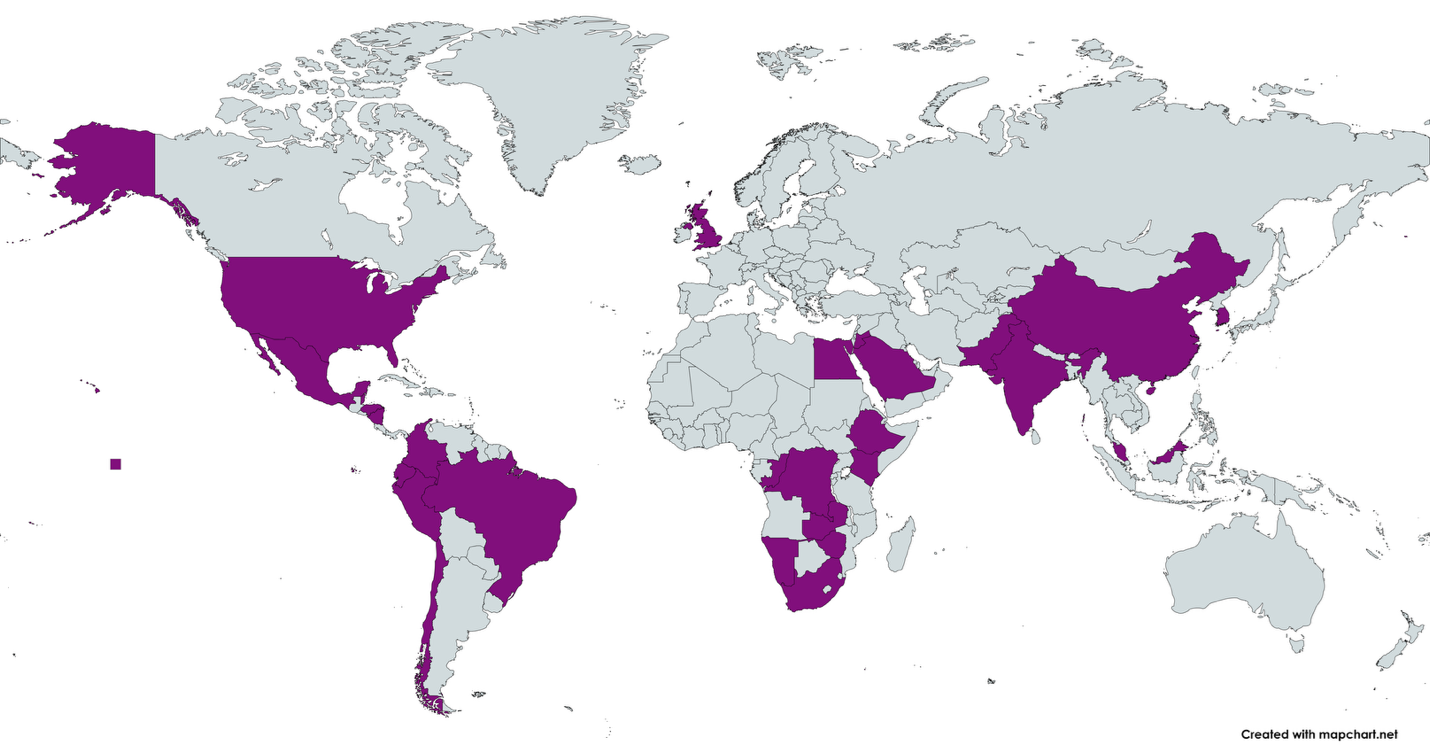
Much of our research with humans is informed by evolutionary perspectives, asking how things like cognition, cooperation, creativity, language learning, body image, social learning, and morality develop in ways that are adaptive to different cultural, ecological, and social environments. We work with collaborators and local communities to carry out studies with children and adults across a wide range of cultural contexts, spanning nearly 30 countries across Europe, Africa, Asia, the Middle East, and Latin America. This includes small-scale societies, rural, urban, and industrialised settings, and cross-national comparisons. This work allows us to explore which aspects of human psychology are shared across societies, and which are shaped by local norms, practices, and opportunities.
A feature of this research theme is its strong comparative approach. Alongside human developmental research, some of our work also examines nonhuman animals—particularly our closest living primate relatives—to understand the evolutionary roots of cognition, behaviour, and learning. By comparing humans with other animals, we can learn which capacities are uniquely human and which reflect deeper evolutionary continuities.
Our work is closely integrated with the Durham Cultural Evolution Research Centre (DCERC), creating a vibrant interdisciplinary hub that integrates psychology, anthropology, biology, and related disciplines. Through DCERC, we collaborate with international researchers, local communities, and non-academic partners, and contribute to debates about cultural transmission, innovation, cooperation, and social change.
Together, our research aims to build a more globally representative, evolutionarily informed understanding of development—one that recognises both shared foundations and meaningful diversity in how minds grow.
Map of countries we are working in or with collaborators in:
Staff
| Name | Research Keywords |
|---|---|
| Dr Fabienne Andres (PDRA) | |
| Prof Lynda Boothroyd | Body image, Gender, Attraction, Intervention, Evolutionary Psychology |
| Dr Jacky Chan | Bilingualism, infancy, language development, cognitive development |
| Prof Zanna Clay | Cross-cultural, comparative cognition, social cognition, emotion, empathy, great ape, communication, socio-emotional development, infancy, tool-use, cultural evolution, primate |
| Dr Samuel Forbes | Infancy, Language Development, Cognitive Development |
| Dr Rohan Kapitany | Religion, Reality Beliefs, Social Transmission, Cultural Learning |
| Dr Sheina Lew Levy | Imitation, teaching, innovation, social learning, cultural evolution, cultural acquisition, subsistence strategies, cross-cultural research |
| Dr Bruce Rawlings | Innovation, creativity, social learning, cross-cultural, cultural evolution |
| Dr Tracey Thornborrow (PDRA) | |
| Dr Charlotte Wilks (PDRA) |
Media Enquiries
For media enquires, please contact the below individuals on:
- Cross-cultural body image - Prof Lynda Boothroyd
- Children's creativity and innovation - Dr Bruce Rawlings
- Great apes, primate behaviour, empathy and socio-emotional development - Prof Zanna Clay
Other Research Areas
Find out more about our other research areas.
Cognitive and Sensory Development
/filters:quality(70)/prod01/prodbucket01/media/durham-university/departments-/psychology/research/research-groups/developmental-science/Cognitive_and_Sensory_Dev.jpg)
Education and Learning
/filters:quality(70)/prod01/prodbucket01/media/durham-university/departments-/psychology/research/research-groups/developmental-science/Education_and_Learning.jpg)
Mental Health and Wellbeing
/filters:quality(70)/prod01/prodbucket01/media/durham-university/departments-/psychology/research/research-groups/developmental-science/MentalHealth_and_Wellbeing.jpg)
Neurodiversity
/filters:quality(70)/prod01/prodbucket01/media/durham-university/departments-/psychology/research/research-groups/developmental-science/Neurodiversity.jpg)